
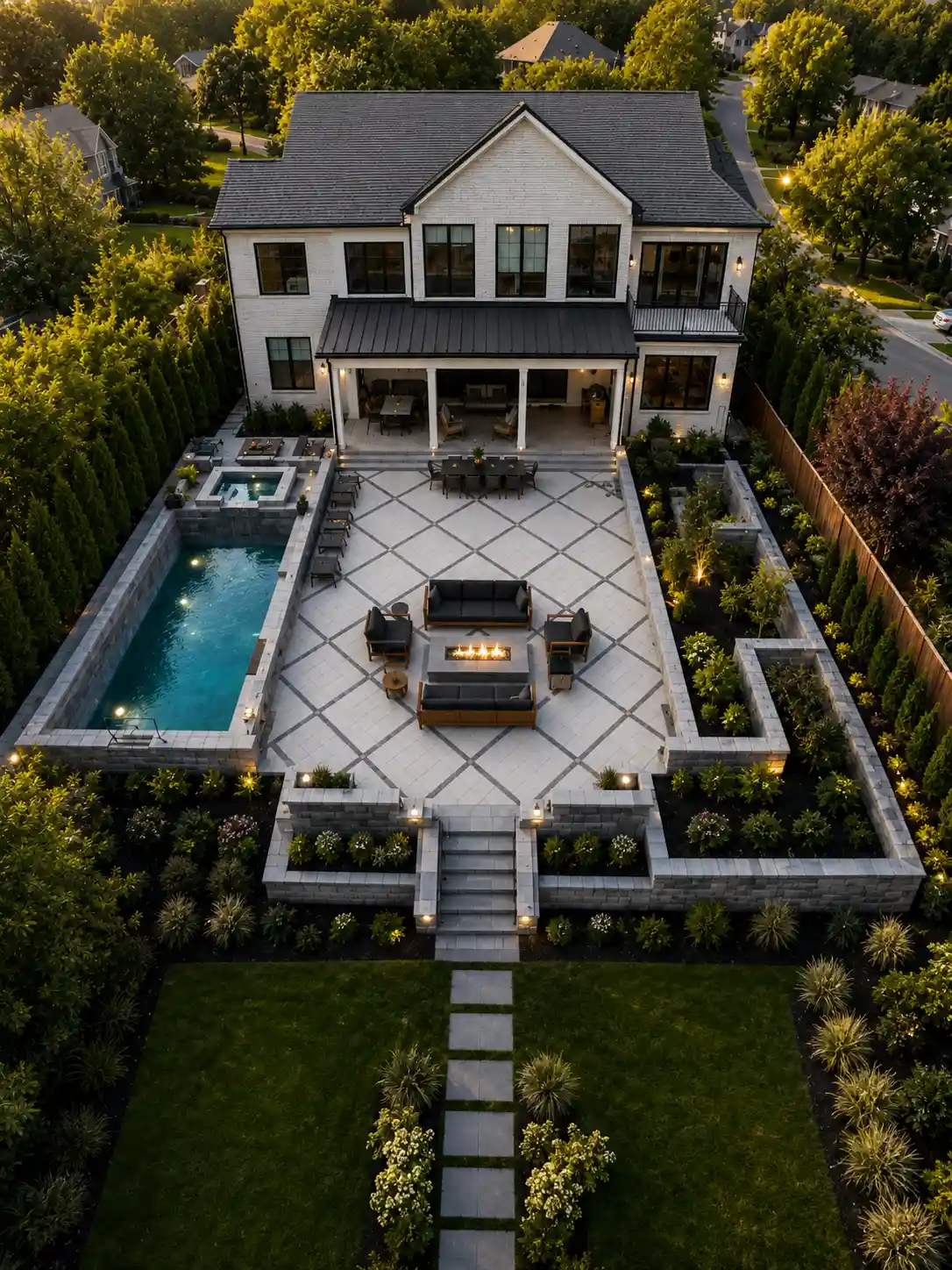
A polished portfolio is a useful starting point, but it cannot tell you who will handle a drainage surprise or whether the deck and patio are being designed as one space. When you interview outdoor contractors in Maryland, ask about the people, documents and decisions behind the finished photographs.
Use the same seven questions with each finalist so the estimates are easier to compare. Verify credentials through the appropriate Maryland authority, including the Home Improvement Commission where applicable. The answers should reveal who designs the work, who builds it and who takes responsibility when the site changes.
1. Are you properly licensed and insured for this work?
Ask for the business name and license information, then check it through the applicable Maryland authority. Maryland’s Home Improvement Commission provides consumer advice and license verification resources. Also ask about liability insurance and workers’ compensation as applicable. If electrical, plumbing or gas work is involved, establish which qualified trade will perform it. An outdoor living contractor should be able to explain the roles clearly.
Do not assume that an attractive portfolio proves the right credential for every service. The exact scope matters. Keep a record of the name and license you checked so the estimate, agreement and project team refer to the same company.
2. Have you built projects with similar site conditions?
If your yard slopes, ask to see a project on sloped ground. A flat patio photograph tells you little about how a crew handles grading or drainage. Invite the contractor to explain a real challenge, what changed and who approved the solution.
If possible, ask for references relevant to your project type. Confirm that images represent the company’s work and whether any part was designed or built by another team. A current portfolio also helps you see how materials weather and how finished spaces connect to homes.
3. Who develops the design and construction scope?
Some contractors work from client drawings; others provide design-build planning. Find out when measurements occur, what deliverables you receive and how layout alternatives are compared. A 3D rendering can help you understand the space, but ask for dimensions, material selections and construction details too.
For a multi-feature backyard, ask who coordinates the deck, patio, kitchen, planting and drainage. If separate subcontractors are involved, learn who directs them and resolves conflicts. One clear point of responsibility can make decisions easier during construction.
4. How will you handle permits and inspections?
Permits are too important for a vague promise. Ask who checks the requirements for your county, prepares the application, pays the fees and schedules inspections. Deck and trade work can be treated differently, and the answer should be written into the proposal.
Be cautious of a blanket assurance that a project needs no permit without a site-specific explanation. Requirements depend on dimensions, height, connections, location and the county. Confirm current rules with the relevant agency.
5. What exactly is included in your estimate?
Compare dimensions, base preparation, structural components, product lines, railing, stairs, lighting, utilities, cleanup and landscaping repair. Ask whether demolition and disposal are included. A quote that leaves major items as unspecified allowances can look less expensive while making the final cost harder to predict.
Request a written schedule of selections and exclusions. For a paver patio, ask about the base and drainage. For a deck, ask about footings, framing, flashing and guardrails. For an outdoor kitchen, ask about appliances and utility connections. The same headline description can hide very different work.
6. How do changes and surprises affect the price?
A crew can uncover buried utilities, weak soil or damage behind existing construction. Ask what happens before additional work begins: how will they document the condition, price the change and get your approval? A clear process is easier to live with than a surprise invoice.
Clarify the payment schedule and what milestones trigger payments. Maryland consumer guidance describes legal protections and contract expectations; review current official information and the agreement before signing. Avoid relying on verbal promises that conflict with the written scope.
7. What happens after completion?
Ask what workmanship warranty is offered, which manufacturers cover products, who handles a warranty claim and what maintenance the homeowner must perform. Find out what the final walkthrough includes and whether you receive product information, permit records and care instructions.
A strong proposal should explain how the project will be handed over. This matters for composite boards, pavers, lighting and planting, each of which has different maintenance requirements. Confirm the name and contact route for follow-up questions.
Compare the whole proposal
Set the proposals side by side. Do the dimensions, materials, permits, drainage work and cleanup actually match? Then weigh credentials, relevant experience, communication and aftercare alongside price. A strikingly low bid may simply describe less work.
Frequently asked questions
How many estimates should I get?
Enough to understand the scope and alternatives. Two or three well-documented proposals are more useful than many vague totals.
Should I ask for a 3D design?
It can help with a complex layout or elevation change. Confirm what the design includes, whether revisions are possible and how it connects to construction drawings.
Can one team coordinate several outdoor features?
A design-build firm may do so directly or through qualified trades. Ask for the named project lead and how work by specialists is supervised.
Discuss your outdoor project with STONIX
If you are considering STONIX, ask the team these same seven questions and request a written scope for your specific site. You can review its outdoor work at https://stonixgroupllc.com/ and custom backyard design, then arrange a consultation at contact STONIX.