
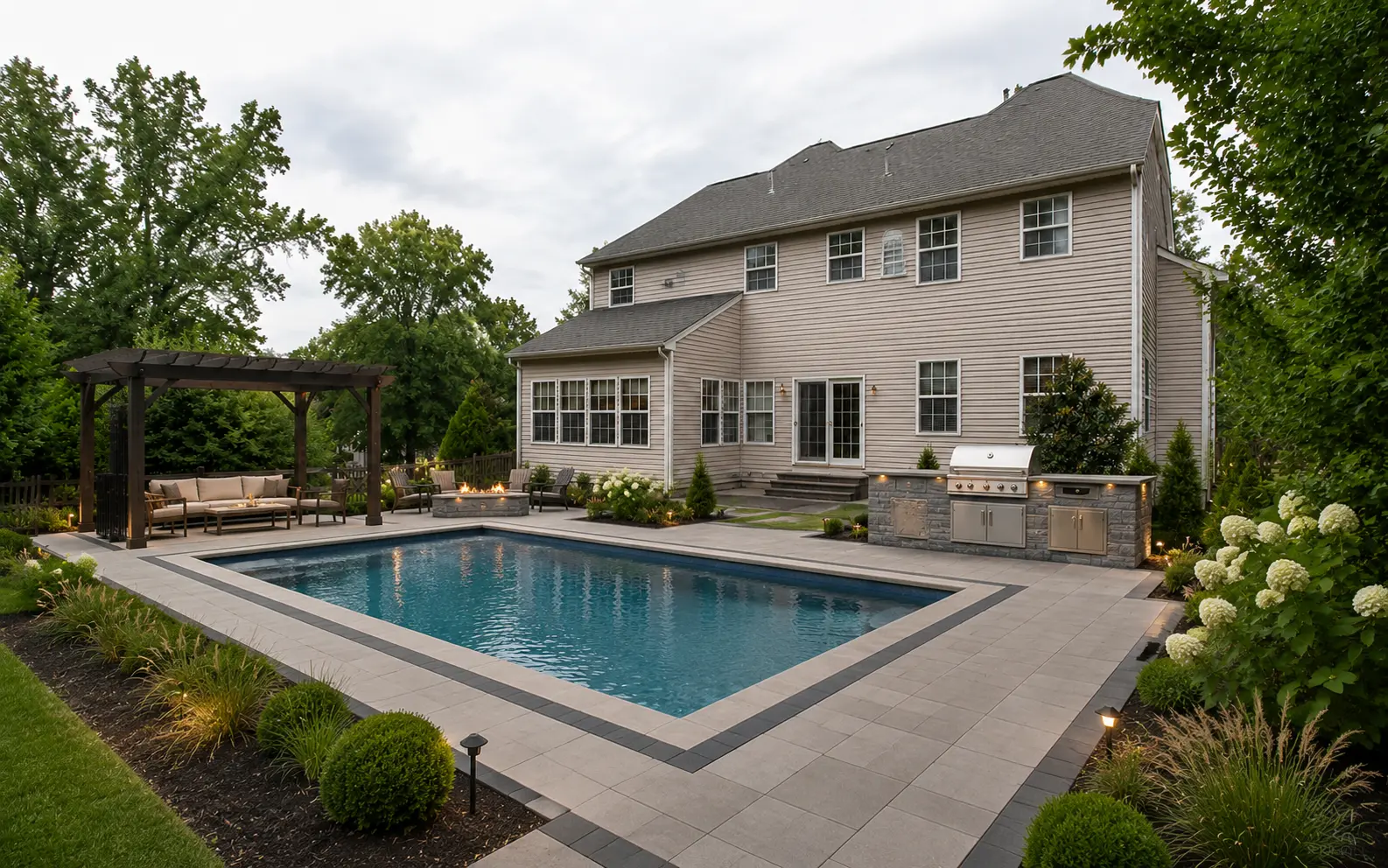
Should you fix the patio you have or rethink the whole yard? The answer depends on what is working beneath the surface. If the layout suits your family and the structure is sound, a focused renovation may be enough. If drainage, circulation, an undersized deck and plans for a kitchen all collide, a broader design can save you from solving the same problem twice.
Walk through the yard as you use it now. Where does water collect? Where do guests step off the deck? What would have to be torn up to add that kitchen later? Those details tell you more about the right scope than a before-and-after photograph.
Choose a focused renovation when the foundation works
If a patio has the right dimensions, a resurfacing or targeted repair may refresh the space without rebuilding the whole yard. If an existing deck frame is structurally sound and compliant, a contractor may be able to replace the surface and railings. An inspection must come first: hidden rot, inadequate footings or poor flashing can change the scope substantially.
A limited project still deserves a clear brief. Describe the defect, the desired result and what must remain. Ask whether new work can tie safely into the existing construction and how it will affect drainage. Request a written explanation of work excluded from the estimate. A low price for surface work may omit repairs that the site actually needs.
Choose a custom plan when parts depend on one another
Picture the deck stairs landing exactly where you hoped to put a dining table. Or a new patio covering the easiest route for kitchen utilities. These features affect one another, even when you build them in different years. A master plan lets you settle the layout first and phase construction around your budget.
Custom design is also useful on a difficult property. Significant slopes, poor access, privacy concerns and multiple door levels call for more than selecting a paver color. The design process should document existing conditions, intended use, material choices and the likely need for structural or permit review. That planning takes effort, but can prevent expensive rework.
Compare total scope, not only initial price
Ask for separate prices for essential site work, core living area and optional features. The same project can be priced with wood or composite decking, different railings or a basic versus full kitchen. Compare proposals on equivalent assumptions: size, elevation, foundation, utilities, permit handling, cleanup and warranties.
Keeping existing work can be a smart saving if it is sound and fits the long-term layout. But a new patio that needs to be opened next year for gas or drainage is an expensive shortcut. Likewise, you need not redesign the entire property when a targeted repair solves the problem.
Build in phases without losing the overall design
Phasing helps control spending, but sequence matters. Address drainage, grading, underground services and structural supports before finished paving and planting. A phase-one plan should clearly show what is being built now and what is reserved for later. Make sure the first phase works as a usable backyard on its own.
For example, you could construct a patio and seating area now while reserving space and utility routes for a future outdoor kitchen. Or you could replace an unsafe deck first, then add coordinated landscape improvements later. Ask the designer which future elements require decisions today. Do not assume every feature can be added without opening completed work.
What should be in the estimate?
Ask each bidder to show the actual work: dimensions, demolition, materials, drainage, utility routes, permits, schedule assumptions and exclusions. If you are weighing renovation against redesign, request both scopes in writing. You should be able to see exactly what the larger budget buys.
STONIX uses 3D visualization in its design-build process. A view of the proposed backyard can help you judge whether the added scope improves how the spaces connect. Use the visualization alongside a construction scope; it should not be the sole basis for choosing a contractor.
Frequently asked questions
Is a custom backyard always more expensive?
A broader project generally includes more work, but the price depends on its actual scope. A premium renovation of one area could cost more than a simple coordinated redesign elsewhere. Get site-specific proposals.
Can I keep part of my existing patio or deck?
Possibly. Have the contractor assess condition, level, drainage, structural integrity and how the retained work will connect to new construction.
What if I have a fixed budget?
State the range early and rank must-haves. Ask for a base scope and separately priced options. This helps protect essential performance work while allowing aesthetic upgrades to be phased.
Plan the right scope with STONIX
Bring STONIX photos of the yard and a short list of what frustrates you today. Ask them to compare a focused repair with a coordinated backyard plan, including what could be built in phases. See the custom backyard and deck services at custom backyard design and custom deck systems, or request a conversation at contact STONIX.